





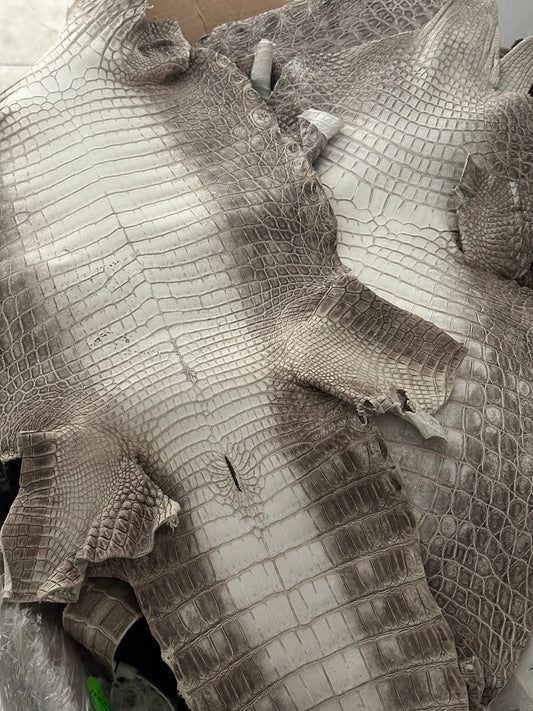

The 5 Reasons Himalayan Costs More
يشارك
The 5 Reasons Himalayan Costs More
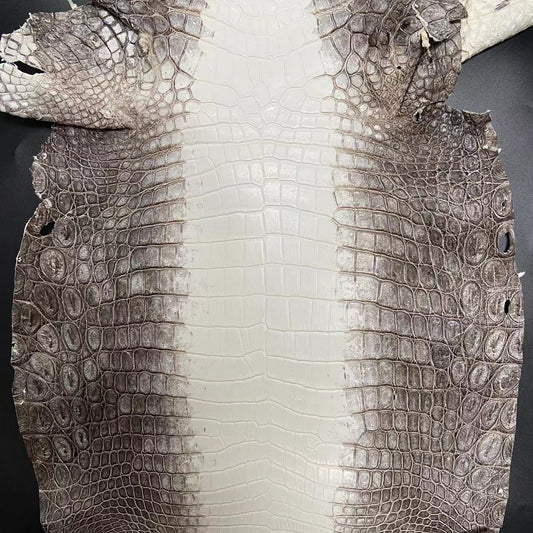
1. Only Elite Skins Qualify
Not every crocodile or alligator skin can become Himalayan. We require:
- Symmetrical belly scales with minimal scarring
- Consistent thickness (too thin = dye bleeds; too thick = uneven absorption)
- Natural light base color (darker skins can't achieve the creamy white gradient)
Result: 90-95% of skins are rejected for Himalayan finishing.
2. 3-4 Week Hand-Dyeing Process
Unlike spray-on finishes that take hours, Himalayan requires:
- Stage 1: Base color application and curing (5-7 days)
- Stage 2: Gradient hand-painting from center to edges (7-10 days)
- Stage 3: Sealing and buffing to prevent color transfer (5-7 days)
- Stage 4: Final inspection and touch-ups (2-3 days)
Result: Each skin receives 40+ hours of artisan labor.
3. Master Tanner Expertise
Our lead tanner has spent 20 years perfecting the gradient technique. The skill required:
- Knowing exactly how much dye each scale will absorb
- Blending the transition zones so there are no harsh lines
- Adjusting for humidity and temperature during curing
Result: This isn't a process you can outsource to junior staff.
4. High Failure Rate
Even with elite skins and expert technique, 15-20% of Himalayan attempts fail quality control due to:
- Uneven color absorption
- Gradient lines that are too abrupt
- Color bleeding during sealing
Result: Failed skins are downgraded to standard finishes, and the cost is absorbed.
5. Market Demand Exceeds Supply
Luxury brands like Hermès popularized Himalayan crocodile (their Birkin bags in this finish sell for $100,000+). Artisan demand has surged, but production capacity remains limited.
Result: Scarcity drives premium pricing.
Is Himalayan Worth the Investment?
For High-End Designers: Absolutely. Himalayan signals luxury and craftsmanship. A handbag made with this finish can command 2-3x the price of standard crocodile.
For Artisans Building a Portfolio: Yes, if you're targeting affluent clients. A single Himalayan piece becomes a showstopper that elevates your brand.
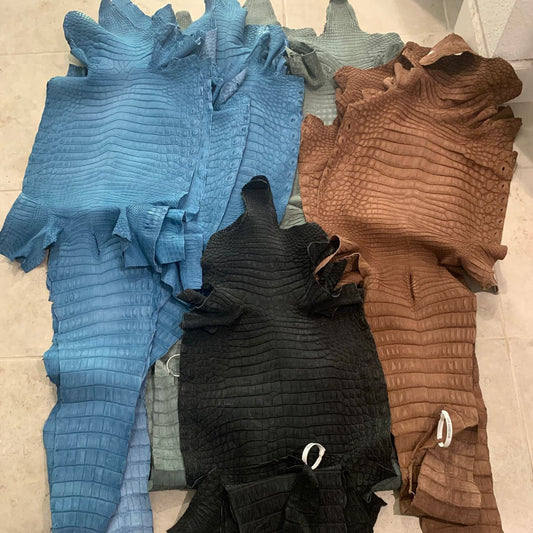
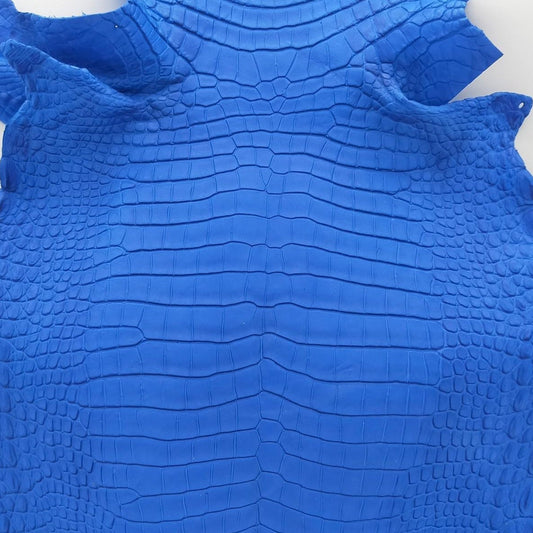
For Budget-Conscious Makers: Consider our Nubuck or Matte finishes instead. They're equally beautiful and durable, just without the gradient premium.
,
- Nile Crocodile Himalayan – Grade 1, 30-35cm belly width, $1,800-$2,400
- American Alligator Himalayan – Grade 1, 25-30cm, $1,600-$2,000
- Saltwater Porosus Himalayan – Grade 1, 35-40cm, $2,200-$2,800
[VIEW HIMALAYAN COLLECTION] | [REQUEST CUSTOM DYEING]
What Artisans Are Saying
"I used Himalayan crocodile for a custom clutch. My client paid $3,500—double what I charge for standard leather. The finish sells itself." – Elena R., Leather Artisan, Barcelona
"Seeing the dyeing process helped me understand why it costs more. Now I can educate my clients instead of just quoting a price." – James L., Bespoke Accessories, London
Next in the Series: Leather Grading Explained: The Transparent Truth About Grade 1, 2, and 3 (Video 4 drops next week)
Tags: Himalayan crocodile leather, exotic leather dyeing, ombré leather finish, luxury crocodile skin, premium alligator leather, investment-grade exotic skins, master tanner techniques


